How Do You Find the Right Waterproofing System for Your Property?
Professional waterproofing provides essential protection that safeguards your property from costly water damage and structural defects. Consequently, choosing the right contractor and system requires more than comparing quotes or picking the cheapest option available. You should research local reviews, check licensing credentials, and confirm compliance with Australian Standards before signing a contract. Many property owners struggle to understand which waterproofing system suits their specific building type. Therefore, taking the time to understand your options can save you from expensive repairs later. Choosing a specialist who values compliance and precision will always result in a much longer-lasting outcome.
Identifying your specific waterproofing needs and building type
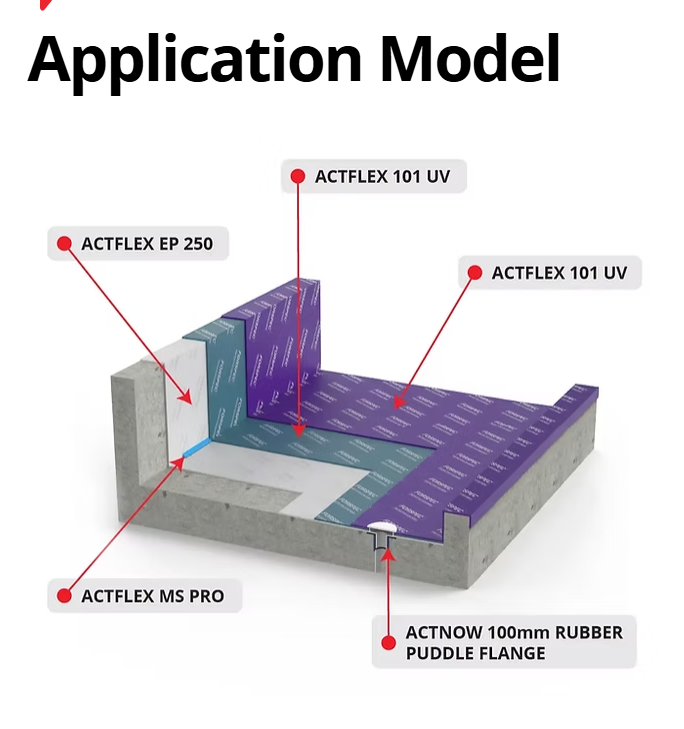
Understanding your building's exposure to water is the first step toward achieving a durable, long-lasting result. Furthermore, you must determine whether the area is an internal wet area, an external balcony, or a below-ground structure before booking any work. A specialist at a licensed waterproofing company will often provide a site assessment to discuss these unique conditions. They use professional tools to check moisture, falls, and substrate condition while maintaining compliance with AS 3740:2021. Consequently, you will receive a system that suits your specific location and protects your investment for decades. Skilled contractors always prioritise the integrity of the substrate during every single stage of application.
Researching local waterproofing contractors with excellent customer reviews
Online reviews provide honest insights into the skills and reliability of a local waterproofing business. Additionally, you should check whether a contractor holds the correct state licence before booking any work. Pay close attention to comments about compliance documentation, tidiness, and communication throughout the project. Many reputable contractors showcase completed flood tests and certificates as proof of their workmanship. Therefore, reviewing this documentation helps you visualise the level of care applied to a previous job. Reading about the experiences of other property owners helps you avoid contractors who cut corners.
Understanding internal vs external waterproofing systems
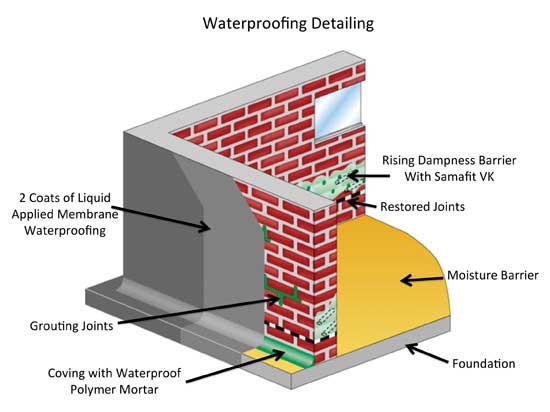
Waterproofing generally falls into two categories: internal (negative-side) and external (positive-side) systems. Furthermore, internal waterproofing is applied to the interior face of a structure and is common in bathrooms, laundries, and basement walls, typically using acrylic, polyurethane, or cementitious membranes. External waterproofing is applied to the exterior face of balconies, podiums, and below-ground structures using torch-on bituminous, spray-applied polyurethane, or HDPE sheet systems. This approach is generally preferred because the membrane is protected from hydrostatic pressure on the ground side. Experienced contractors understand how to select the correct system for each substrate and exposure, and they provide a compliant installation that keeps water out for many years to come.
Essential features of a professional waterproofing job
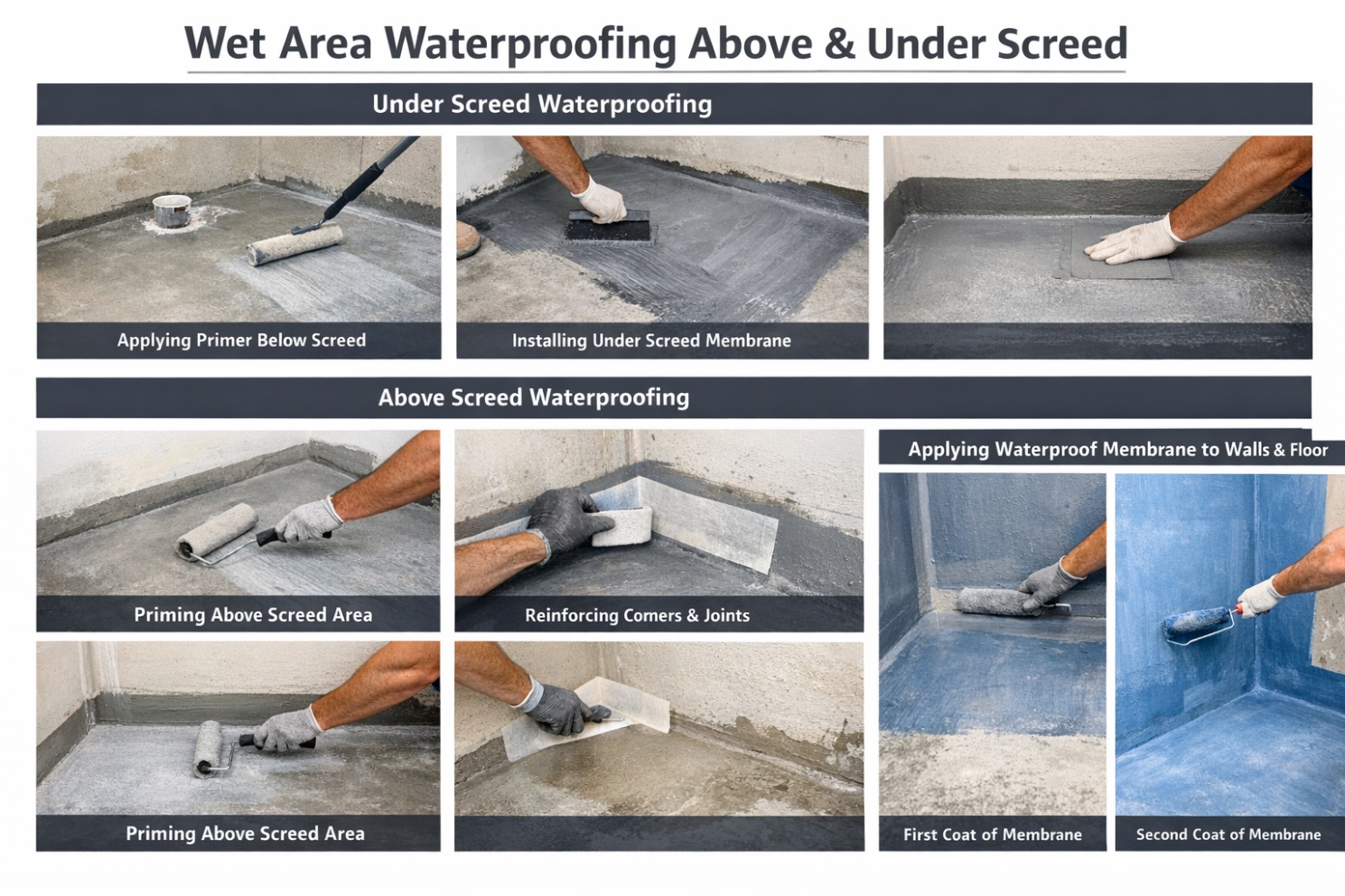
A high-quality waterproofing job provides more than just a coat of membrane over a surface. Moreover, the process should feel thorough and well-documented from the moment work begins. You must look for a contractor who prioritises compliance and correct detailing at every junction. Skilled applicators will take their time to ensure every corner, penetration, and upstand is properly reinforced. Thus, a professional approach reflects the dedication and technical knowledge of the entire team.
- Substrates are fully prepared, ground back, and free of sharp arris edges before priming.
- Reinforcing tape is embedded at every internal corner, junction, and penetration.
- Correct dry film thickness (DFT) is achieved and checked with a wet film gauge.
- A minimum 24-hour flood test is carried out and photographed before tiling begins.
- A waterproofing certificate is issued and retained for the statutory liability period.
How to choose the right waterproofing membrane for your project?
Selecting a membrane involves more than just picking the cheapest product on the shelf. Moreover, you should evaluate the movement, exposure, and finish required for each specific area. You need a system that matches the substrate and withstands the conditions it will face. High-quality contractors invest in premium, compliant products to keep their work performing for decades. Therefore, choosing the correct membrane type for each application ensures you get the very best result.
- Acrylic membranes suit low-movement internal wet areas such as bathrooms and laundries.
- Polyurethane membranes offer high elongation of 300–700%, making them ideal for balconies and areas with structural movement.
- Cementitious membranes work well where tiles are bonded directly over the membrane, such as on concrete substrates.
- Torch-on bituminous or HDPE sheet systems provide proven, long-term protection for basements, podiums, and below-ground walls.
Evaluating waterproofing requirements across different building locations
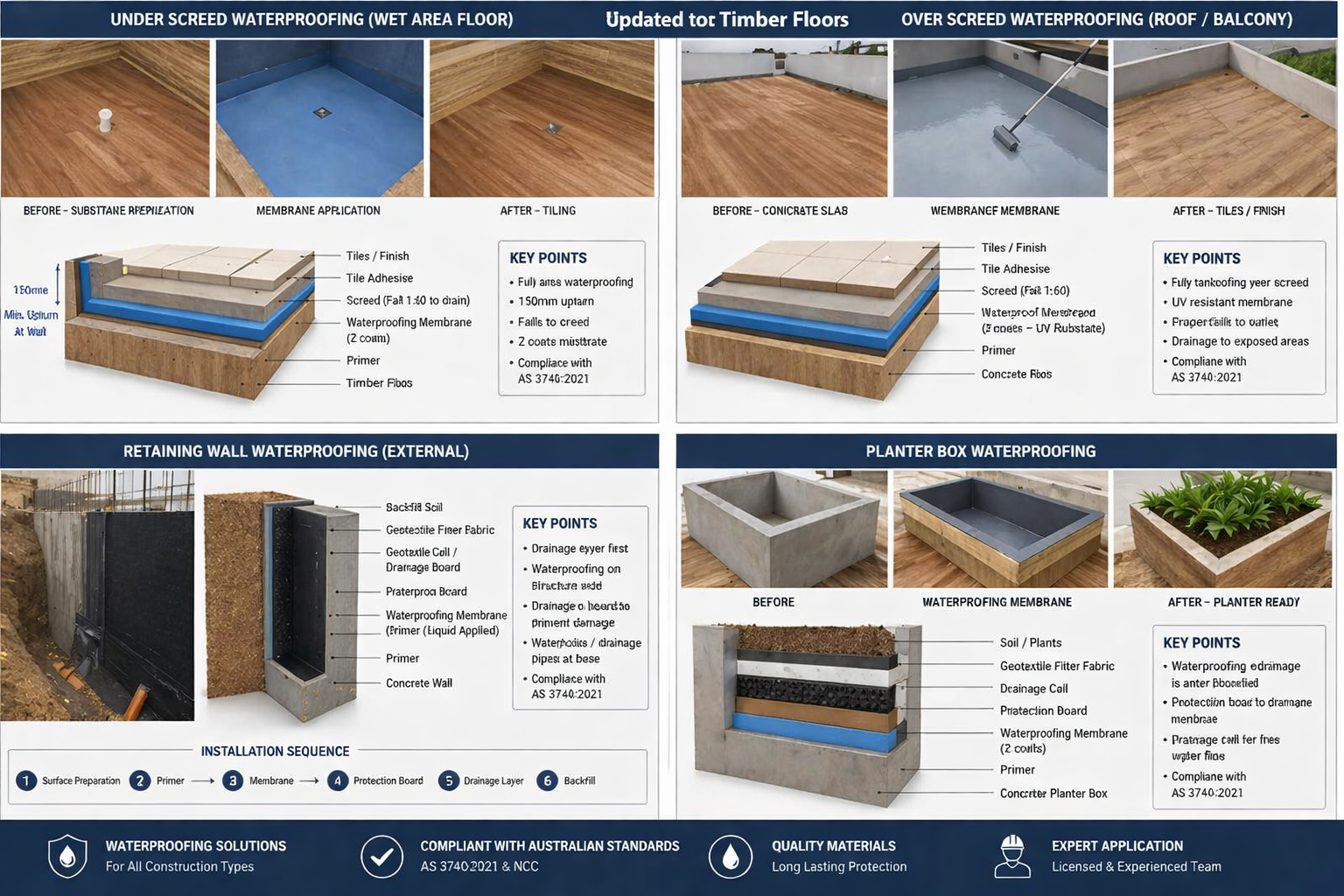
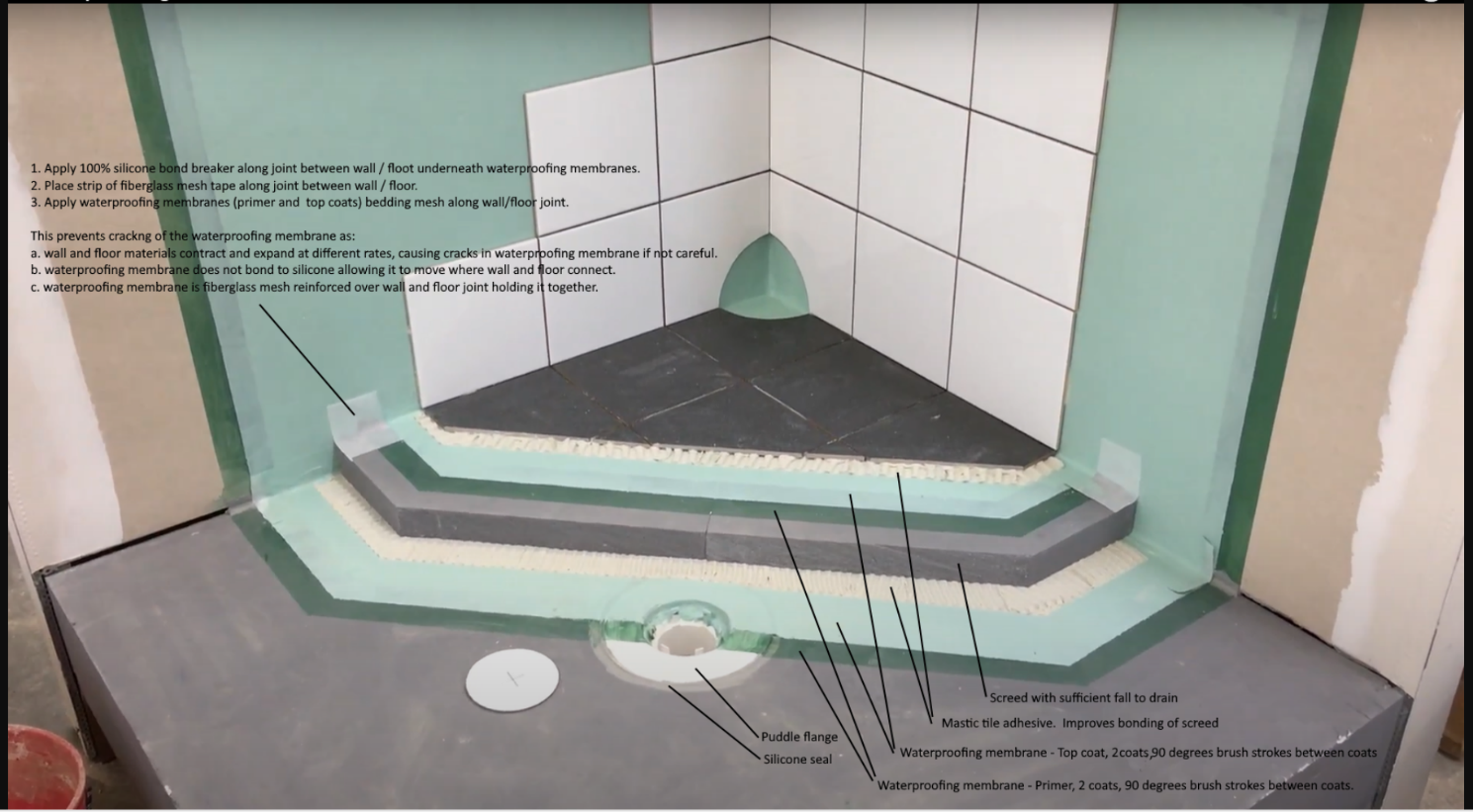
Location plays a significant role in determining the correct waterproofing height, fall, and membrane type. Furthermore, shower recesses require membrane to a full 1800mm wall height and a minimum 1:60 floor fall to the drain under AS 3740:2021. Baths need membrane extended to at least 25mm above the rim, while laundries typically require only a 150mm upstand at the floor-wall junction. Balconies and porches demand a minimum 1:100 fall, 150mm upstands, and movement joints at every 4.5 metres. Planter boxes present a unique challenge, requiring a dedicated root-barrier layer above the membrane to prevent failure. Dedicated contractors understand these varied requirements and apply the correct detail to every location.
Documentation and compliance are the secret to a successful project
Clear documentation helps confirm that your waterproofing has been installed correctly and will perform as intended. However, many property owners fail to request a flood test or compliance certificate before tiling begins. You should always ask for photographic evidence of the flood test and a copy of the waterproofing certificate. Reputable contractors value this documentation because it protects both the homeowner and the builder under statutory liability laws. Therefore, insisting on proper records ensures you have proof of compliance if a defect ever arises. A great contractor will complete a council or certifier inspection before any tiling work begins.
Protect your property with a trusted waterproofing specialist
Finding the right contractor requires patience and a bit of research into licensed, experienced professionals. In addition, you must prioritise compliance and long-term performance over the cheapest available quote in your area. Choosing a licensed waterproofing specialist guarantees that you receive a system built to AS 3740:2021 and NCC requirements. A qualified team will focus on protecting your property while delivering a durable result that lasts for decades. Finally, your journey toward a watertight property ends when you trust a team of experienced professionals. Your building is a significant investment that deserves genuine protection from water damage.
FAQs
1. How do I know if I need internal or external waterproofing?
Internal waterproofing protects wet areas like bathrooms and laundries from the inside, while external waterproofing protects balconies, podiums, and below-ground structures from the outside. A licensed contractor can assess your building and recommend the correct system.
2. Why is AS 3740:2021 compliance important?
AS 3740:2021 sets the minimum wall heights, floor falls, and membrane requirements for waterproofing in Australia. Compliance ensures your waterproofing meets the legal standard and protects your statutory warranty rights.
3. How long does waterproofing need to cure before tiling?
Membranes typically need 24 to 48 hours to cure before tiling can begin, though this varies by product. Manufacturers usually specify a tiling window of 14 to 28 days from application.
4. What is a flood test and why is it required?
A flood test involves filling a wet area with water for a minimum of 24 hours to confirm the membrane holds without leaking. It is a mandatory compliance step before tiling in most Australian states.
5. How much does professional waterproofing typically cost?
Costs vary depending on the system and location, but failed waterproofing repairs commonly range from $15,000 to $80,000 or more. Investing in a compliant installation upfront is far more cost-effective than remediation later.
6. What is the difference between acrylic and polyurethane membranes?
Acrylic membranes are water-based and suit low-movement internal wet areas, while polyurethane membranes offer much higher elongation, making them better suited to balconies and areas with structural movement.
7. Why do planter boxes need special waterproofing?
Planter boxes contain wet soil and root systems that can penetrate standard membranes. Root damage causes over 60% of planter waterproofing failures, so a dedicated HDPE or torch-on system with a root barrier is essential.
8. What causes most waterproofing failures?
Common causes include poor substrate preparation, the wrong primer, insufficient dry film thickness, and skipped reinforcing tape at corners and junctions. Choosing an experienced, licensed contractor greatly reduces these risks.
9. How often should waterproofing be inspected?
Wet areas and balconies should be visually inspected periodically for cracking, staining, or grout failure, as these can be early signs of membrane failure. Waterproofing generally carries a statutory liability period of 6 to 10 years.
10. Why should I hire a licensed waterproofing contractor?
Licensed contractors carry the required training, insurance, and knowledge of AS 3740:2021 to deliver compliant, long-lasting work. Licensing is a legal requirement for waterproofing work in every Australian state and territory.
Get in touch to discuss your next project, or call us on 0448 504 380.