Painting Estimation Services in Australia
Accurate painting takeoffs are essential to keep finishes packages on budget and avoid costly surprises on site. Missing details such as surface preparation, primers and sealers, the number of coats, doors, frames and trims, ceiling heights, or access and protection can significantly affect the final cost. Our estimators carefully quantify every wall, ceiling, door, frame and coating in accordance with the project drawings, finishes schedules, specifications, the NCC 2022, and relevant Australian Standards, delivering a detailed and reliable Bill of Quantities (BOQ) you can tender with confidence.
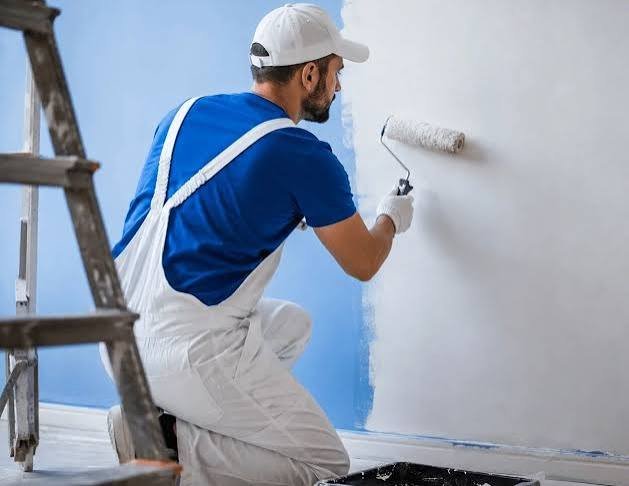
- By area (m²) — walls and ceilings split by room and level
- By item and LM — doors, frames, skirtings and trims
- Coat by coat — preparation, primer, undercoat and topcoats
Introduction to painting estimation
Painting is the protective and decorative coating applied to internal and external surfaces, doing several jobs at once: protecting the substrate, providing durability and cleanability, and delivering the architectural finish. It covers everything from plasterboard walls and ceilings to timber, render, steel and concrete, and each substrate has its own preparation, primer and coating requirement. That variability is why a schedule-driven, surface-by-surface estimate is the only approach that holds up.
Getting the numbers right at tender stage matters just as much as getting the finish right on site. A painting takeoff turns architectural drawings and the finishes schedule into a proper Bill of Quantities, with walls, ceilings, doors, frames and trims measured separately by room, level and coating system. That is the service we run: fast, accurate, standards-compliant takeoffs built for builders, subcontractors and project managers who need numbers they can tender, procure and control costs against.
Why accurate estimation matters
Painting scopes are detail-heavy. Substrate condition, number of coats, ceiling heights, colour changes, access requirements and protection of surrounding finishes all move the price, and small measurement or specification errors compound quickly across a job. Getting the takeoff right protects your business at every stage:
- Tender accuracy — price off real measured quantities, not a gut-feel allowance
- Material procurement — order the correct primers, sealers and topcoats and avoid delays from running short
- Labour planning — schedule preparation and painting crews against real area and item quantities
- Reduced wastage — stop over-ordering paint and specialist coatings
- Better profitability — price the whole system, preparation and access included, not just the topcoat
- Cost control — track variations against an itemised BOQ instead of a lump-sum allowance
- Fewer disputes — a documented scope and finishes schedule leaves much less to argue about later
Scope of work
Our painting takeoffs generally cover the full range of internal and external coating systems, including:
- Internal painting — walls, ceilings, bulkheads and feature walls
- Doors, frames and joinery — doors, frames, architraves, skirtings and built-in joinery
- External painting — rendered walls, cladding, eaves, fascias, soffits and gutters
- Timber finishes — stains, clear coatings and decks
- Steel and metalwork — protective coatings to structural steel, handrails and balustrades
- Fire-protective coatings — intumescent paint systems where specified
- Floor coatings and line marking — car parks, warehouses and industrial floors
- Repaints and maintenance — strata, commercial and public buildings
What we measure
Every BOQ we put together separates quantities out by system, surface and room, so you can price and order with confidence rather than crossing your fingers. That includes:
- Wall and ceiling area (m²), split by room, level and finish type
- Doors, frames, windows and joinery by number, with each side and edge counted
- Skirtings, architraves, cornices and trims (LM)
- Surface preparation — filling, sanding, patching, sealing and cleaning
- System build-up by coat — primer, undercoat and topcoats, matched to the specification
- Steel and metalwork by area or LM, with coating thickness and system noted
- Protection, masking and drop sheets to adjoining finishes and fixtures
- Scaffolding, ladders, EWPs and access allowance, priced by height and area
- Wastage provision, adjusted per product and surface
Our quantity takeoff process
We build every painting estimate from first principles, not a rough $/m² allowance:
- Review architectural drawings, the finishes schedule and the painting specification
- Confirm substrates, coating systems, number of coats and colour changes before pricing
- Identify the full painting scope by room, level and elevation
- Measure wall, ceiling and item quantities directly from the drawing set
- Cost each system coat by coat — preparation, primer, undercoat and topcoats
- Prepare a detailed Bill of Quantities (BOQ)
- Carry out quality checking against drawings and specifications
- Deliver the completed takeoff in Excel and PDF format
Australian Standards we work to
Every takeoff we prepare is referenced against the current Australian Standards and the National Construction Code, including:
| Standard | Scope |
|---|---|
| AS/NZS 2311 | Guide to the painting of buildings — surface preparation, systems and application |
| AS 3750 | Paints for buildings — paint product specifications |
| AS/NZS 2312.1 | Protection of structural steel against atmospheric corrosion — paint coatings |
| AS 4361.2 | Guide to lead paint management — residential and commercial buildings |
| AS 1530.4 | Fire-resistance tests of elements of construction — relevant to intumescent coatings |
| AS/NZS 1576.1 | Scaffolding — general requirements for access |
| NCC Volume One | Building Code Class 2–9 — fire resistance and deemed-to-satisfy provisions |
| NCC Volume Two | Building Code Class 1 & 10 — housing fire, weatherproofing and thermal provisions |
What’s included in our BOQ
| Item | Included |
|---|---|
| Material Quantities | Yes |
| Labour Quantities | Yes |
| Area Measurements (m²) | Yes |
| Linear Measurements (LM) | Yes |
| Room-Wise Cost Split | Yes |
| Waste Allowance | Yes |
| BOQ in Excel Format | Yes |
| PDF Summary Report | Yes |
| Marked-Up Drawings | Yes |
Industries we serve
- Residential
- Apartments & Multi-Residential
- Commercial
- Industrial
- Healthcare & Aged Care
- Education
- Retail
- Government
Software we use
- Bluebeam
- PlanSwift
- AutoCAD
- Excel
Why choose us
- Specialist estimators — people who understand coating systems and finishes, not generalists
- Real rates — priced against real coverage and application rates, not guesswork
- Itemised detail — every door, frame, trim and joinery item itemised separately
- Full system logic — preparation through to topcoat, costed coat by coat
- All substrates — steel, timber, render and plasterboard all covered
- Standards-based — takeoffs prepared to current Australian Standards and NCC 2022
- Fast turnaround — ready when you’re up against a tender deadline
- All painting types — internal, external, protective and specialty coatings
Frequently asked questions
How is painting measured?
Painting is measured by wall and ceiling area in square metres, split by room and level, with doors, frames and windows counted by number, and skirtings, architraves and trims measured separately in lineal metres, each costed coat by coat from preparation through to topcoat.
What makes the biggest difference to painting pricing?
The condition of the substrate, the number of coats and the access required. A new plasterboard wall, a repaint needing heavy preparation and a high external elevation price very differently, which is why the specification is confirmed before pricing.
Is surface preparation included?
Yes, where it is part of the scope. Filling, sanding, sealing and cleaning are itemised separately so you can see exactly what is allowed, and we state any assumptions about substrate condition in the BOQ.
Are doors and frames priced differently from walls?
Yes. Doors, frames, windows and joinery are counted by number or measured by lineal metre rather than by area, since they involve more cutting in, more coats and more handling per square metre.
Do height and access affect the price?
Yes. High ceilings, stairwells, atriums and external elevations all need ladders, scaffolding or EWPs, and access can add a significant premium on top of the painting itself.
Do indicative rates vary by project type?
Yes, quite a bit. A new apartment fitout, a heritage repaint and an industrial steel coating all price very differently, which is why every takeoff is priced against measured quantities rather than one blended rate.
Get started
Need an accurate painting quantity takeoff for your next project? Get in touch with our estimating team for a detailed BOQ prepared to Australian Standards, or call us on 0448 504 380.