Plumbing Estimation Services in Australia
If a plumbing quote's ever come back way under what the job actually cost, it's usually because the takeoff missed a fixture count, a pipe run, or a hot water system spec. Our estimators measure every pipe run, fixture and fitting against the AS/NZS 3500 Series, so the BOQ you send out is right the first time.
Introduction to plumbing estimation
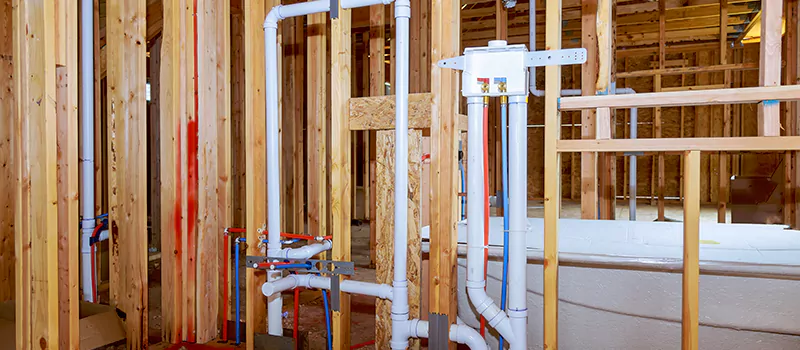
Plumbing is a licensed trade and one of the most underquoted on Australian construction projects. Every building needs a complete hydraulic system — water supply, hot water, sanitary drainage, stormwater and gas — and missing an item, or applying a flat $/m² rule across the whole scope, almost always ends in a budget shortfall or a non-compliant install. Cost is driven by fixture count and spec, hot water system type, storey height and pipe run, pipe material, and site access and underground conditions, which is exactly why specification-driven estimation matters on every residential, multi-residential and commercial job.
Getting the numbers right at tender stage matters just as much as getting the installation compliant on site. A plumbing takeoff turns drawings and hydraulic specifications into a proper Bill of Quantities — pipework, fittings, valves, fixtures and testing, measured separately by system and checked against the AS/NZS 3500 Series. That's the service we run: fast, accurate, standards-compliant takeoffs built for builders, subcontractors and project managers who need numbers they can actually tender, procure and control costs against.
Why accurate estimation matters
Plumbing scopes are detail-heavy — fixture specification, hot water system type, pipe material and site conditions all move the price, and small measurement or specification errors compound quickly across a job. Getting the takeoff right protects your business at every stage:
- Tender accuracy — submit competitive, defensible pricing based on measured pipe runs and fixture counts, not guesswork
- Material procurement — order the correct pipe material, fittings, and fixtures, reducing on-site delays
- Labour planning — schedule licensed plumbers against real system-by-system quantities
- Reduced wastage — avoid over-ordering copper, PEX, and specialty fittings
- Better profitability — protect margins by pricing the full scope, including testing and certification
- Cost control — track variations against an itemised BOQ rather than a lump-sum allowance
- Avoiding variations — fewer disputes and claims when the original system design was measured correctly
Scope of work
Our plumbing takeoffs generally cover the full range of hydraulic systems, including:
- Cold water supply — mains to all fixtures, potable and irrigation
- Hot water systems — storage, continuous flow, heat pump, and solar
- Sanitary drainage (DWV) — waste from fixtures to sewer, above and below ground
- Stormwater drainage — roof, surface, and subsoil to stormwater main
- Gas installations — pipe sizing, appliance connections, and flues
- Pressure limiting valves, tempering valves, and fixture isolation valves
- Sanitary fixtures — WCs, vanity basins, and showers, supply and install
What we measure
Every BOQ we put together separates quantities out by system and pipe material, so you can price and procure with confidence rather than crossing your fingers. That includes:
- Pipework (LM), by material and diameter — copper, PEX-A, uPVC DWV, HDPE, and cast iron
- Fixtures and fittings (No.) — WCs, basins, showers, taps, and valves
- Hot water system supply and install (item), by type and capacity
- Pressure limiting and tempering valves (No.), where mandated by mains pressure or AS/NZS 3500.4
- Below-ground drainage, including bedding and backfill allowance
- Labour hours, based on AS/NZS 3500 compliant installation methods
- Testing, certification, and compliance permit allowance per dwelling
- Wastage allowances — typically 5–10% for straight pipework, 10–15% for below-ground drainage
Our quantity takeoff process
We run the same auditable process on every job so the BOQ is accurate and easy to verify:
- Review architectural drawings and hydraulic specification
- Confirm mains pressure and hot water system requirements before pricing valves and boosters
- Identify the full plumbing trade scope — water supply, hot water, DWV, stormwater, and gas
- Measure pipe runs and count fixtures directly from the drawing set
- Cost each system separately — pipe, fittings, valves, fixtures, labour, and testing
- Apply relevant Australian Standards to each system
- Prepare a detailed Bill of Quantities (BOQ)
- Carry out quality checking against drawings and specifications
- Deliver the completed takeoff in Excel and PDF format
Australian Standards we work to
Every takeoff we prepare is referenced against the current Australian Standards and the National Construction Code, including:
| Standard | Scope |
|---|---|
| AS/NZS 3500.1 | Water services — cold and hot water supply, pressure, and flow rates |
| AS/NZS 3500.2 | Sanitary plumbing and drainage — drain gradients, vents, and trap distances |
| AS/NZS 3500.3 | Stormwater drainage — pipe sizing, pit spacing, and overflow design |
| AS/NZS 3500.4 | Heated water services — HWS sizing, tempering valve, and TPRV requirements |
| AS/NZS 5601 | Gas installations — pipe sizing, appliance connections, and flue requirements |
| AS 1432 | Copper tubes — sizes, grades, and wall thickness for water supply pipe |
| AS/NZS 1260 | uPVC DWV pipes and fittings — material and pressure classifications |
| NCC Volume Three | National Construction Code — overarching performance requirements for hydraulic services |
What's included in our BOQ
| Item | Included |
|---|---|
| Material Quantities | Yes |
| Labour Quantities | Yes |
| Linear Measurements (LM) | Yes |
| Fixture and Fitting Counts (No.) | Yes |
| System-Wise Cost Split | Yes |
| Waste Allowance | Yes |
| BOQ in Excel Format | Yes |
| PDF Summary Report | Yes |
| Marked-Up Drawings | Yes |
Industries we serve
- Residential
- Multi-Residential
- Commercial
- Industrial
- Healthcare & Aged Care
- Education
- Retail
- Hospitality
- Government
Software we use
- Bluebeam
- PlanSwift
- AutoCAD
- Excel
Why choose us
- Experienced plumbing estimators
- Pipe sizes calculated from AS/NZS 3500 hydraulic design — not guesswork
- Fixture quantities traced from drawings — every tap, valve, and appliance counted
- Full system build-up — pipework, fittings, valves, fixtures, labour, and testing
- Certification and compliance testing costs included as standard
- Takeoffs prepared to current Australian Standards
- Fast turnaround on tender-critical projects
- Clear, audit-ready BOQ, ready for tender or contract
Frequently asked questions
How is plumbing measured?
Plumbing is measured in lineal metres of pipework by material and diameter, with fixtures, fittings and valves counted individually, and each system — water supply, hot water, DWV, stormwater and gas — costed separately rather than folded into one blended rate.
Does hot water system type affect the price?
Yes. Hot water system selection drives a significant cost swing — an entry-level electric storage unit sits at the low end, a heat pump sits in the middle, and a solar system with gas boost sits at the top, so the specified system is always confirmed before pricing.
Does storey height affect the plumbing budget?
Yes. Double-storey projects need extended risers, extra access panels, and a more complex drainage stack design, and typically add a meaningful percentage to both water supply pipework and DWV drainage over an equivalent single-storey job.
Is a pressure limiting valve always required?
Where mains pressure exceeds 500 kPa, a pressure limiting valve is mandatory under AS/NZS 3500.1, and in high-pressure or multi-storey buildings a pressure zone booster set may also be required — both are priced separately in the takeoff.
Does pipe material choice affect cost and longevity?
Yes. Copper generally costs more than PEX for water supply pipework but reduces joint count and improves longevity, while PEX is often preferred for in-slab installs for its flexibility — the hydraulic engineer's specification always gets checked before pricing.
Do indicative rates vary by project type?
Yes, quite a bit. A single-storey standard fit-out, a double-storey home with extended pipe runs, and a multi-residential building all price very differently, which is why every takeoff is priced against measured quantities rather than one blended rate.
Get started
Need an accurate plumbing quantity takeoff for your next project? Get in touch with our estimating team for a detailed BOQ prepared to Australian Standards, or call us on 0448 504 380.