Structural Steel Estimation Services in Australia
If a structural steel price has ever come back way off once fabrication starts, it's usually because the takeoff missed something in the connection design, surface treatment or fire protection. Our estimators measure every member, connection and coating system against AS 4100:2020 and AS/NZS 3679:2016, so the BOQ you send out is right the first time.
Introduction to structural steel estimation
Structural steel is one of the most cost-variable trades in Australian construction — it isn't a single product, it's a complete fabricated-and-erected system. Cost comes down to section type and weight, fabrication complexity, connection type, surface treatment and paint system, fire protection, and erection method and site access, so small differences in scope can shift a price by tens of thousands of dollars. Getting the specification and quantities right matters on every industrial, commercial and multi-storey job.
Getting the numbers right at tender stage matters just as much as getting the fabrication and erection right on site. A structural steel takeoff turns structural drawings into a proper Bill of Quantities — member tonnage, connections, surface area and fire protection, measured separately by section type and checked against the relevant Standards. That's the service we run: fast, accurate, standards-compliant takeoffs built for builders, subcontractors and project managers who need numbers they can actually tender, procure and control costs against.
Why accurate estimation matters
Structural steel scopes are detail-heavy — section type, fabrication complexity, connection design, paint system and fire protection all move the price, and small measurement errors compound fast across a job. Getting the takeoff right protects your business at every stage:
- Tender accuracy — you're pricing off real measured tonnage and area, not a gut-feel allowance
- Material procurement — order the correct sections, plate and consumables, and skip the fabrication delays that come from running short
- Labour planning — put fabricators, welders and erection crews on site against real tonnage and connection-count figures, not guesswork
- Reduced wastage — stop over-ordering costly primary steel and coating systems
- Better profitability — protect your margin by pricing the whole scope, connections and protective coatings included, not just the easy bits
- Cost control — track variations against an itemised BOQ instead of a single blended tonne rate
- Fewer disputes — when the original scope was measured properly, there's a lot less to argue about later
Scope of work
Our structural steel takeoffs generally cover the full range of fabricated and erected steel elements, including:
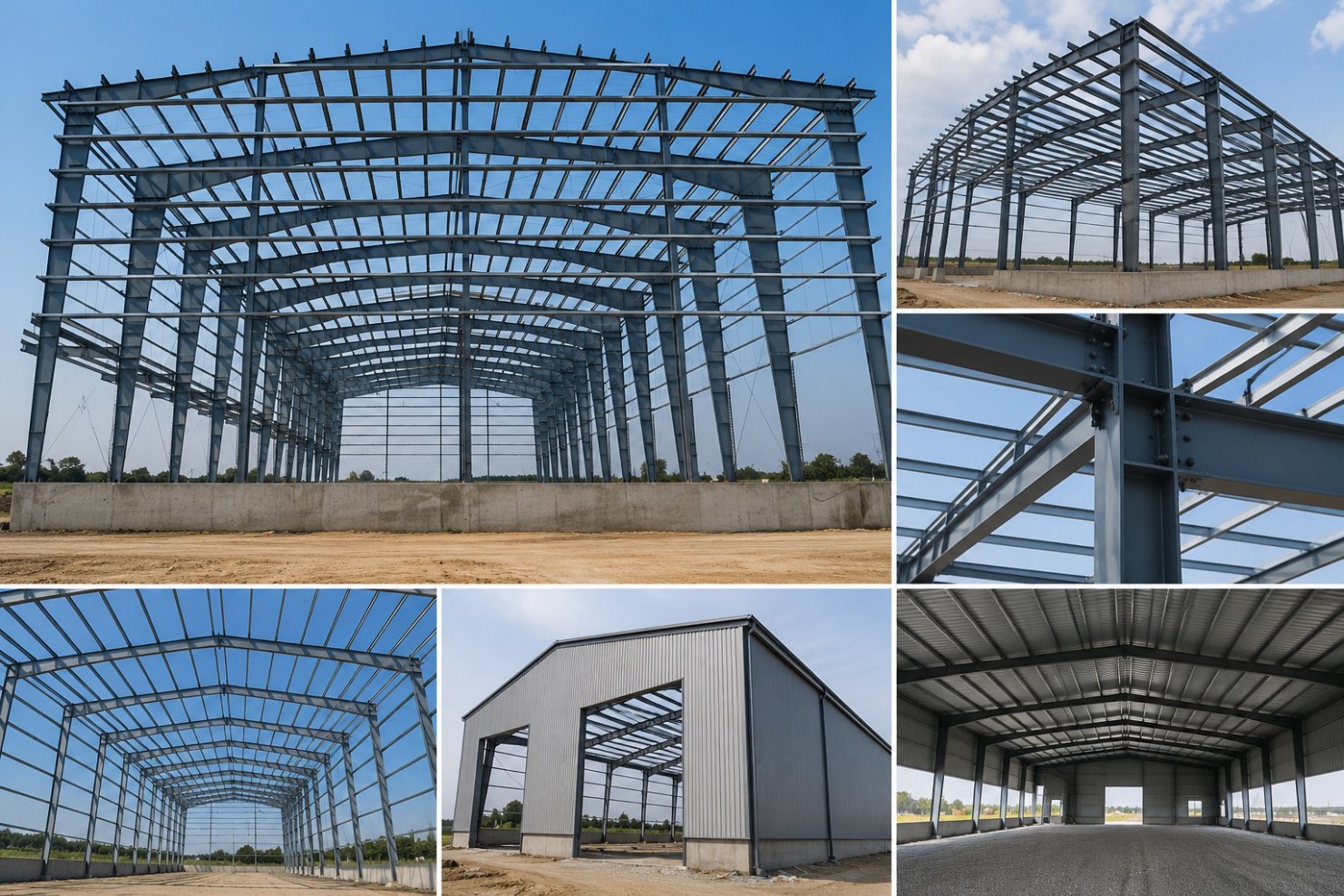
- Portal frames — rafters, columns, and light industrial sheds
- Universal beams and columns (UB/UC) and welded beams and columns (WB/WC)
- Purlins and girts (PFC, C and Z sections)
- Bracing — angle and rod bracing systems
- Plate work — base plates, end plates, and stiffeners
- Crane girders, transfer beams, and moment-frame connections
- Mezzanine floor frames
- Structural staircases
- Holding-down bolt sets and base plate grouting
What we measure
Every BOQ we put together separates quantities out by section type and fabrication category, so you can price and order with confidence rather than crossing your fingers. That includes:
- Member tonnage by section type (UB, UC, WB, WC, PFC, RHS, plate), calculated from AS/NZS 3679 weight tables
- Fabrication complexity rating per element — simple, moderate, or complex, with connection and plate allowances
- Surface area (m²) per member for paint and fire protection, calculated from section profile and length
- Fire protection area by FRL zone, with intumescent DFT calculated from the section factor (Hp/A)
- Holding-down bolt sets, base plate grout, and shear stud quantities, enumerated per No.
- Crane and erection allowance, priced per tonne with site-specific access and sequence commentary
- Wastage factors — 2–3% cut wastage; 1–2% offcuts for complex fabrication
Our quantity takeoff process
We run the same process on every job so the BOQ is accurate and easy for you to check against the drawings:
- Review structural drawings and specification
- Take off steel members by mark — section type, grade, length, and quantity, with weight from AS/NZS 3679 tables
- Classify each element by fabrication complexity and apply the correct $/t rate with connection and plate allowances
- Assess crane class, gang size, lift count, and site access for erection pricing
- Calculate surface area for paint system DFT and fire protection by FRL zone
- Apply relevant Australian Standards to each element and system
- Prepare a detailed Bill of Quantities (BOQ)
- Carry out quality checking against drawings and specifications
- Deliver the completed takeoff in Excel and PDF format
Australian Standards we work to
Every takeoff we prepare is referenced against the current Australian Standards and the National Construction Code, including:
| Standard | Scope |
|---|---|
| AS 4100:2020 | Steel structures — design and connection capacity |
| AS/NZS 3678:2016 | Structural steel — hot-rolled plates, floorplates and slabs |
| AS/NZS 3679.1:2016 | Structural steel — hot-rolled bars and sections |
| AS/NZS 2980 | Qualification of welders for fusion welding of steel structures |
| AS 1418 | Cranes, hoists and winches — crane operation requirements |
| NCC 2022 | National Construction Code — fire resistance level (FRL) and performance provisions |
| AIQS Best Practice | Measurement conventions for quantity surveying and estimating in Australia |
What's included in our BOQ
| Item | Included |
|---|---|
| Material Quantities | Yes |
| Labour Quantities | Yes |
| Tonnage Measurements (t) | Yes |
| Area Measurements (m²) | Yes |
| Linear Measurements (lm) | Yes |
| Unit Counts (No. / EA) | Yes |
| Waste Allowance | Optional |
| BOQ in Excel Format | Yes |
| PDF Summary Report | Yes |
| Marked-Up Drawings | Yes |
Industries we serve
- Residential
- Commercial
- Industrial
- Education
- Healthcare
- Retail
- High-rise
- Government
- Infrastructure
Software we use
- Bluebeam
- PlanSwift
- AutoCAD
- Excel
Why choose us
- Estimators who actually know structural steel, not generalists
- Takeoffs prepared to current Australian Standards
- Fast turnaround when you're up against a tender deadline
- Competitive, transparent pricing
- A detailed, section-by-section BOQ, not a lump sum
- Proper quality assurance on every takeoff, every time
- Tender support for builders and subcontractors
- Real experience across Australian industrial, commercial and high-rise steel projects
Frequently asked questions
How is structural steel measured?
Structural steel is measured by tonnage per section type (UB, UC, WB, WC, PFC, RHS, plate), calculated from AS/NZS 3679 weight tables, with surface area for paint and fire protection measured separately in square metres per member profile and length.
Does fabrication complexity affect the price?
Yes. Simple beams and columns are priced very differently to complex crane girders or moment-frame connections, which is why every element gets classified as simple, moderate or complex before a $/t rate is applied.
Do you include surface treatment and fire protection?
Yes. Surface area for shop paint systems and intumescent or board fire protection is calculated per member profile and length.
Is erection priced separately from fabrication?
Yes. Crane and erection allowances are priced per tonne based on crane class, gang size, lift count and site access, separately from steel supply and fabrication.
Do indicative rates vary by project type?
Yes, quite a bit. A simple portal frame, a moment-frame commercial structure, and a fire-rated mezzanine all price very differently, which is why every takeoff is priced against measured quantities rather than one blended tonne rate.
Get started
Need an accurate structural steel quantity takeoff for your next project? Get in touch with our estimating team for a detailed BOQ prepared to Australian Standards, or call us on 0448 504 380.